Your clinical data does not train any AI: how and why we guarantee it
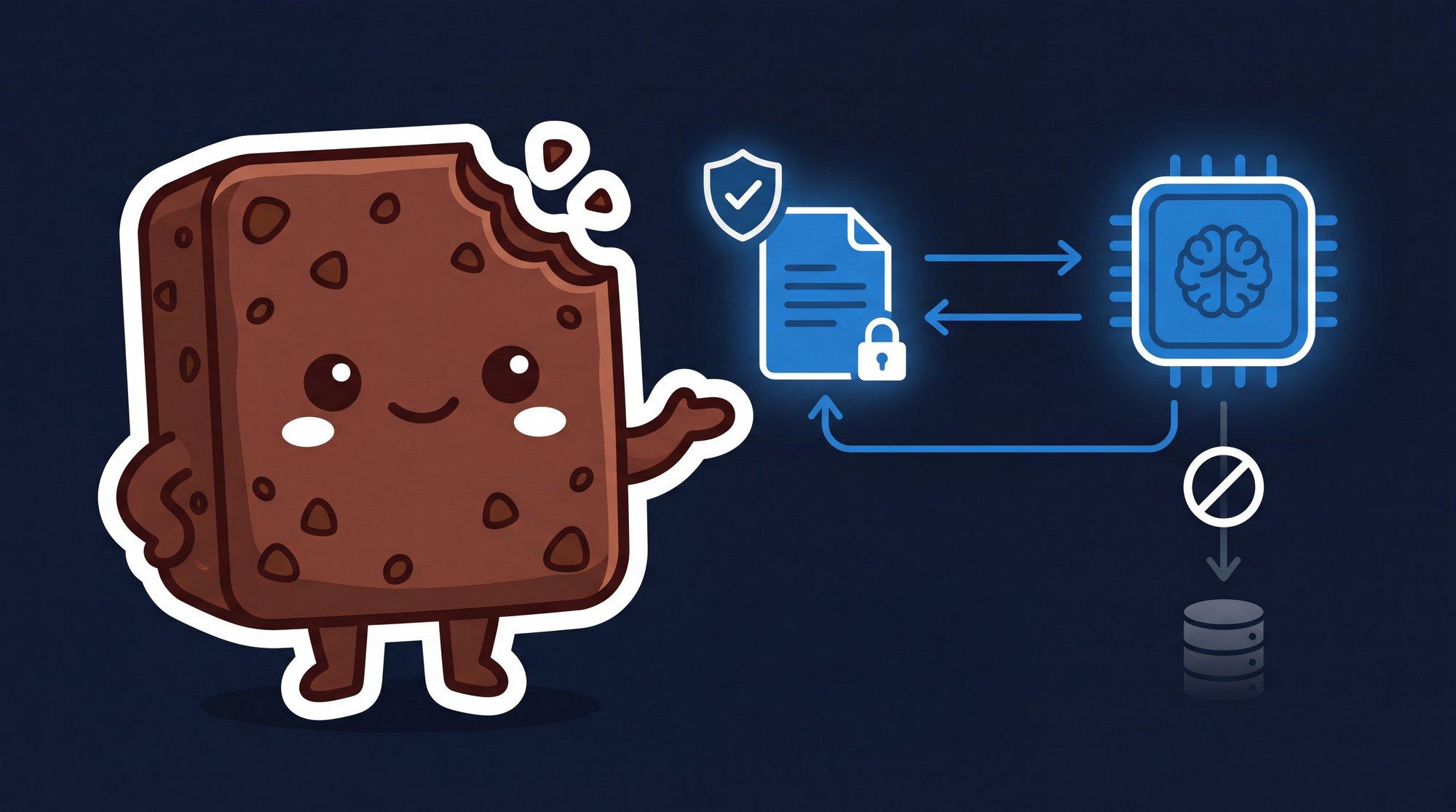
"If I use AI for my session notes, do these data end up training the model?" It's the first question psychologists ask us. And it makes all the sense in the world: you're putting sensitive clinical information into a tool that uses artificial intelligence. You need to know exactly what happens to that data.
The short answer: your clinical data is never used to train any AI models. Neither ours, nor Google's, nor anyone's.
The long answer requires explaining how architecture works inside. That’s what we’re going to do here, with total transparency.
The difference between using AI and training AI
First, a fundamental distinction that is often confused:
Use AI is to send a text to a language model, receive an answer and ready. The model processes your text, generates an answer and discards everything. It is like asking a question over the phone: the person answers you, but does not record the call or learn from it.
Training AI is a completely different process. It involves taking large volumes of data, feeding the model with them for weeks or months of intensive processing, and modifying the internal parameters of the model to "learn" from that data. It is an expensive, deliberate and planned process.
Brauni use AI. Not training. Your clinical information is sent as a temporary context to generate a response, and then disappears.
Note
To think that using ChatGPT or any AI trains the model is like thinking that finding something in Google modifies the search algorithm. They are completely separate processes.
Google Vertex AI: the platform we use
Brauni does not have its own language model. We use Google Vertex AI, Google Cloud's corporate artificial intelligence platform. Specifically, we use Gemini models through the Vertex AI API.
Why Vertex AI and not the public API of Gemini or ChatGPT? For a fundamental reason: contractual privacy warranties.
Vertex AI vs Public APIs: the difference that matters
| Aspect | Public API (Gemini, ChatGPT) | Google Vertex AI |
|---|---|---|
| Do they train with your data? | They can do it (depends on the terms) | No. Contract guaranteed |
| Do you store your prompts? | They can be stored temporarily | Not stored after processing |
| Is there a human revision? | You can review conversations to improve service | No human review of your data |
| Contract coverage? | General Service Terms | Specific Data Processing Addendum (DPA) |
| Certifications? | Variables | SOC 2, ISO 27001, HIPAA selectable |
This table summarizes why we choose Vertex AI. It is neither cheaper nor easier. It is safer.
The contractual guarantees of Google Cloud
When you use Vertex AI through Google Cloud, you are covered by three levels of contractual protection:
1. Google Cloud Terms of Service
The terms of service of Google Cloud explicitly state that Google does not use customer data to train its AI models. This is different from Google's consumer products (such as Gmail or Google Search), where data can be used to improve services.
2 Data Processing Addendum (DPA)
The DPA of Google Cloud is a legal agreement that defines:
- Google acts as data processor, not as a controller
- Data is processed only to provide the requested service
- Google cannot use data for any other purpose
- Confidentiality obligations apply to Google staff
- Google should delete data when requested by the client
3. Vertex AI Specific Terms
The specific terms of Vertex AI add:
- Customer training data - Google does not acquire any rights
- Custom models trained by the customer are from the customer - Google cannot use them
- Prompts and answers are not stored after processing (unless the client explicitly configures it)
Council
These warranties are not marketing words. They are legally binding contractual clauses that Google Cloud must comply with. If it violated them, it would be breaching a contract with specific legal consequences.
How your data flows: step by step
Let's see exactly what happens when you use the AI wizard in Brauni to complete a session note:
1. You send an audio describing the session
The audio is uploaded to the Brauni servers. It is transcribed to text using the Google Cloud voice-to-text service.
2. The context is armed
Brauni take:
- Your therapeutic orientation (from your profile)
- Basic patient data (name, age, diagnosis)
- The structure of your session note template
- The transcribed text of your audio
And put together a structured prompt that's sent to Vertex AI.
3. Vertex AI processes and responds
The Gemini model receives the prompt, generates the completed fields of your session note and sends them back to Brauni. This processing occurs in volatile memory - it is not saved to disk.
4. Response reaches Brauni
Brauni receives the completed fields, shows them to you for review and, when you approve them, saves them Fernet (AES-128) in the database.
5. In Vertex AI there is nothing left
Once the response was generated and sent, there is no record of the prompt or response on Google servers. There is no log of your clinical content. There is no temporary storage. There is no data queue waiting to train a model.
What about audio?
A specific concern is audio. When you record a session summary:
- The audio file is sent to Google Cloud Speech-to-Text for transcription
- The service processes audio, generates text and returns it
- Audio is not stored on Google servers after processing
- Google Cloud Speech-to-Text has the same contractual guarantees as Vertex AI: data are not used to train models
- In Brauni, the original audio is not saved - only the encrypted session note you approved is retained
Important
Never use free or generic transcription tools for clinical audio. Services such as the free version of Whisper, Otter.ai or similar can store and use your data to improve your models. Brauni uses business services with explicit contractual guarantees.
Google Cloud Certifications and Compliance
Google Cloud (the infrastructure where Vertex AI runs) maintains the following security certifications:
- SOC 1, SOC 2 and SOC 3: independent audit of security, availability and confidentiality controls
- ISO/IEC 27001: Information security management
- ISO/IEC 27017: security controls for cloud services
- ISO/IEC 27018: protection of personal data in the cloud
- ISO/IEC 27701: Information privacy management
- HIPAA: Eligibility for Protected Health Information Processing (PHI) - the world's most demanding health standard
- FedRAMP: U. S. government authorization for cloud services
These certifications are not granted by Google. They are granted by independent auditors who verify that security controls comply with international standards.
Why we don't use the public ChatGPT API
OpenAI offers a public API that is excellent for many use cases. But for clinical data, it has limitations:
- OpenAI API terms allow you to use data for abuse detection, which means that someone (or an automated system) could review your prompts.
- OpenAI has changed its privacy policies multiple times - what is safe today may not be tomorrow
- It does not offer the same level of DPA as Google Cloud for business customers
- No HIPAA eligibility in your standard API
This does not mean that OpenAI is generally insecure. It means that for mental health clinical data, we need stronger and more stable guarantees.
What Brauni does besides Vertex AI
The Google Cloud guarantees are the floor. Brauni adds additional layers:
Encryption before and after
- Clinical data are cyphered with Fernet (AES-128) before being stored in the database
- The infrastructure of Google Cloud and AWS add rest encryption and TLS 1.3 in transit
- The prompt sent to Vertex AI is armed in memory and never saved in plain text
- The AI response is encrypted immediately when saved as a session note
Minimum data exposure
We don't send the entire patient's medical records to AI. We send him only what is necessary for the task:
- To complete a note: your audio/text + template structure + basic patient data
- For a chat query: your question + relevant notes found by semantic search
- Never send information to other patients
No intermediate storage
We do not save the prompts that are sent to Vertex AI. We do not save raw responses. We only save the final result (session note) encrypted in the database.
Full audit
Each interaction with AI is recorded in the audit log: who made it, when, for what patient. But the content of the prompt and the response are not made - only the metadata.
Free Brauni test for 30 days, no card
Automatic session notes, digital medical records and more.
Start for freeFrequently Asked Questions
Can Google read my session notes?
No. The data is automatically processed by the AI model. There is no human revision. Furthermore, the data in the Brauni database is encrypted with a key that Google does not have.
What if Google changes its policies?
The contractual terms of the DPA are legally binding. Google cannot unilaterally change them for existing customers. If in the future Google would modify its terms in such a way as to affect privacy, we would migrate to another provider before accepting those terms.
Can I use Brauni if I attend to patients with judicialization?
Yes. The data is encrypted, not shared with third parties and each action is audited. The clinical reports have cryptographic verification that demonstrates its authenticity and integrity.
What if Brauni closes?
Your data is yours. You can export it at any time. And as it is encrypted, if the service ceases to exist, the data in the database would be unreadable without the encryption key.
Does this comply with the 25.326 Law?
Brauni complies with the principles of the 25.326 Law on Protection of Personal Data of Argentina. Article 8 empowers health professionals to process health data of their patients respecting professional secrecy. The data are entered at rest and in transit according to Art. 9, and the patient can exercise his rights of access, rectification and suppression (Art. 14 and 16). For more details, I read our article on Law 25.326 for psychologists.
Trust is built with transparency
We know that entrusting clinical data to an AI tool is a serious decision. We do not ask you to trust blindly. We ask you to verify:
- Los términos de servicio de Google Cloud son públicos
- Las certificaciones de Google Cloud son auditadas por terceros independientes
- Our security page details all protective measures
- This article explains exactly how your data flows
If after reading all this you have questions, email us at soporte@brauni.io. We have nothing to hide.
Brauni uses Google Gemini through Vertex AI in Google Cloud. Clinical data are processed under the terms of Google Cloud Data Processing Addendum and are never used to train artificial intelligence models. Clinical fields are encrypted with Fernet (AES-128) and also operate on secure infrastructure with rest encryption and TLS 1.3 in transit. Brauni complies with the principles of Personal Data Protection Law 25.326.
Related articles
Privacy and Security
Do you use ChatGPT to write clinical reports? What you need to know about your data
What happens to your patients' data when you use ChatGPT, Gemini, or other generational AIs to write clinical reports or notes. Legal, ethical, and safe alternatives.
Privacy and Security
Security and privacy in Brauni: how we protect your patients' data
Meet the 15+ safety layers that Brauni uses to protect your patients' clinical information: military encryption, multifactor authentication, and more.

Privacy and Security
What is Patient Privacy Monitoring and why any health app should have it
Encrypting clinical data is not enough. We explain what Patient Privacy Monitoring is (UEBA applied to health), why HIPAA demands it, and how Brauni detects suspicious access to medical records in real time.