Confidentiality agreement in psychology: when to use and model to download
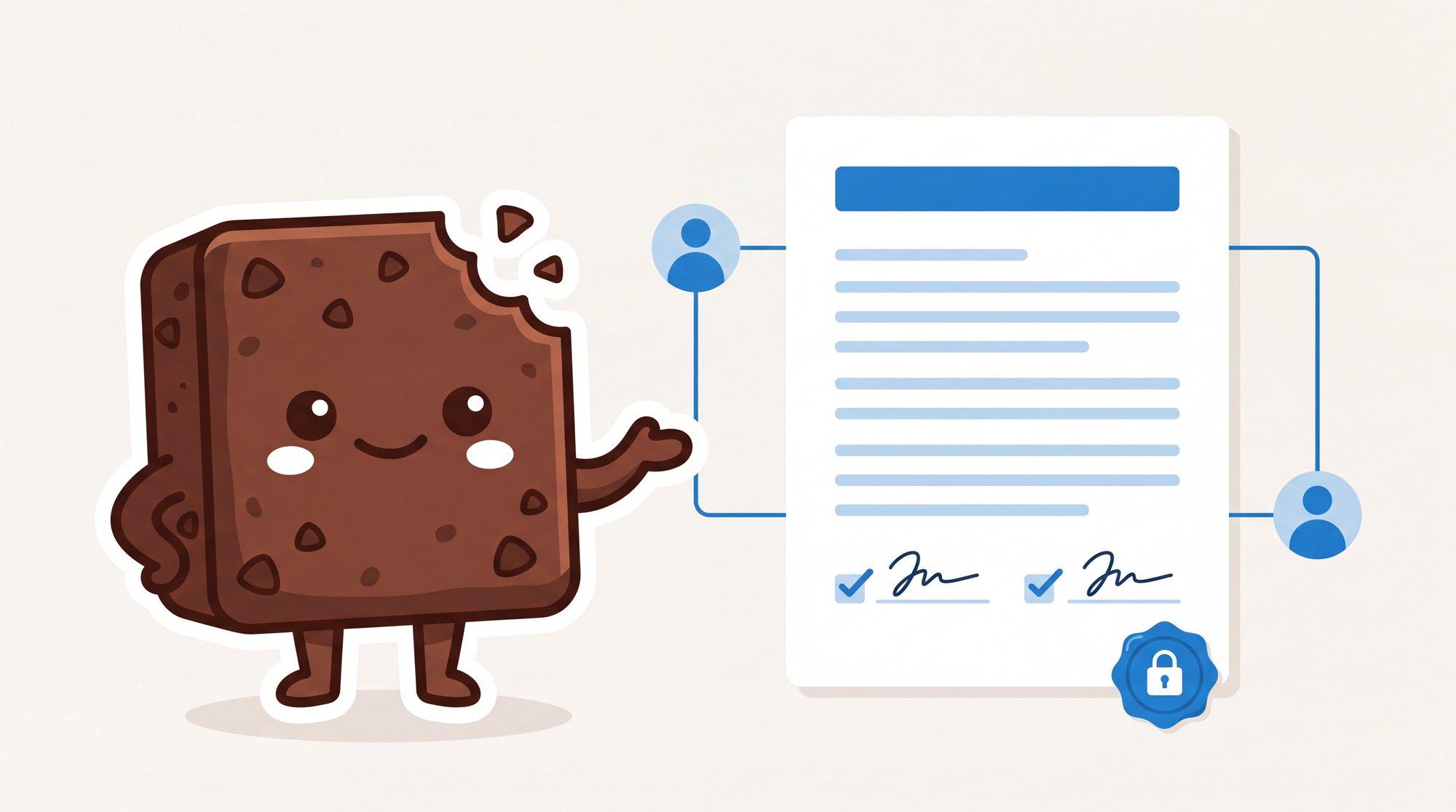
Professional secrecy is a pillar of psychology. But what happens when you share clinical information with a supervisor, a colleague of the interdisciplinary team or an administrative assistant? Professional secrecy binds you as a psychologist, but not necessarily the other people who access that information.
This is where the confidentiality agreement: enters a formal document extending the obligation of reservation to third parties directly or indirectly involved in the care.
What is a confidentiality agreement?
A confidentiality agreement (also called NDA, Non-Disclosure Agreement) is a contract between two or more parties that undertake not to disclose sensitive information to which they have access.
In the context of psychology, it protects patient clinical information when it is shared with people who are not directly reached by professional secrecy.
Note
Professional secrecy is a legal and ethical obligation of the psychologist. The confidentiality agreement is an instrument that extends this protection to other persons who access patient information.
Professional Secret vs. Confidentiality Agreement
These two concepts complement each other, but they are not the same:
| Professional secrecy | Confidentiality agreement | |
|---|---|---|
| Who is obliged? | The registered psychologist | Anyone who signs the agreement |
| What regulates it? | Law 26.529, codes of ethics, provincial laws | Civil and Commercial Code (contracts) |
| Since when does it apply? | Automatically when exercising the profession | Since the signing of the agreement |
| What does it protect? | All things known in professional practice | The specific information defined in the agreement |
| Consequences of non-compliance | Ethical sanctions + civil and criminal liability | Contract civil liability |
When do you need a confidentiality agreement?
You don't always need one. These are the scenarios where it is necessary or highly recommended:
1. Clinical supervision
When you present clinical material to a supervisor, you are sharing sensitive patient information. While in practice it is usually anonymized, a confidentiality agreement formalizes that:
- The supervisor cannot disclose the information of the case
- Clinical material cannot be used outside the scope of supervision
- Recordings or transcripts (if any) must be destroyed at the end
Council
Many codes of ethics recommend that the patient know that his or her case will be presented under supervision. Ideally, this is mentioned in informed consent.
2 Interdisciplinary teams
When working with psychiatrists, social workers, phonoaudiologists or other professionals who do not share the same legal framework:
- Each professional has its own secrecy regime
- A unified agreement guarantees a minimum standard of protection
- Defines what information is shared, for what purpose and to what limits
3. Administrative staff and secretaries
The person answering the phone, scheduling appointments and handling the reception has access to:
- Patient Names
- Meeting times
- Sometimes reasons for consultation or emergency contact details
This staff is not reached by professional secrecy. A confidentiality agreement is must.
4. Virtual assistants or technical support staff
If someone helps you with the digital management of clinical practice (social networks, invoicing, software support), they may have indirect access to sensitive data.
5. Institutions and health centres
When you work in a mental health clinic or facility, the agreement is usually included in the employment contract. If you are not, request it.
6. Research and teaching
If you use clinical material for publications, classes or presentations at congresses:
- The agreement must specify that the material will be anonymized
- Ideally, the patient also gives his or her specific consent for this use.
What should a confidentiality agreement include?
A confidentiality agreement for the psychological field should contain:
Key elements
| Element | Description |
|---|---|
| Parties | Complete identification of the person who reveals and receives the information |
| Definition of confidential information | What type of data are protected (clinical data, patient identity, session material, etc.) |
| Recipient obligations | Do not disclose, do not copy, do not use outside the agreed purpose |
| Exceptions | When confidentiality can be broken (judicial order, life risk) |
| Duration | How long the obligation applies (generally indefinite for health data) |
| Consequences of non-compliance | Civil liability, termination of the employment relationship, ethical complaint |
| Signature and date | Of all parties involved |
Recommended elements
- Procedure for return or destruction of confidential material upon termination of the relationship
- Security measures to be adopted by the recipient (do not leave files in sight, use passwords, etc.)
- Survival clause: the obligation of confidentiality survives the termination of the link
Confidentiality agreement template
Then we leave you an adaptable model. Remember to consult with a lawyer to adjust it to your specific situation and jurisdiction.
Confidentiality agreement
City: [City], [Province]
Date: ___________________
ENTRE:
Developing party: Lic. [Name and Surname], M. P. [Number], with professional address in [address], hereinafter "EL/LA PROFESSIONAL".
Receiving Party: [Name and Surname], DNI [Number], as [clinical supervisor/| member of | interdisciplinary team administrative staff | another], hereinafter "EL/LA RECEPTOR/A".
PRIMER — Object
The purpose of this agreement is to establish the conditions under which EL/LA RECEPTOR/A accesses confidential information related to the professional practice of EL/LA PROFESSIONAL, including but not limited to patient data, clinical records, sessional material and any other information related to psychological care.
SEGUNDA — Definition of confidential information
Confidential information shall be deemed to be any information that EL/LA RECEPTOR/A is aware of in connection with EL/LA PROFESSIONAL, including:
a) Personal and patient identification data (b) Clinical information, diagnoses, treatment plans and medical records (c) Contents of therapeutic sessions (notes, recordings, transcripts) d) Contact and invoicing data of patients (e) Any information that, by its nature or context, should be treated as a reserve
TERM — EL/LA RECEPTOR/A obligations
EL/LA RECEPTOR/A undertakes to:
(a) To maintain strict confidentiality of all confidential information (b) Failure to disclose, reproduce, copy or transmit such information to third parties c) Use the information only for the specific purpose of [write: clinical supervision/teamwork/administrative tasks/etc.] (d) Take the necessary security measures to prevent unauthorized access (e) Notify EL/LA PROFESSIONAL immediately of any security breach or accidental disclosure
FOURTH — Exceptions
The obligation of confidentiality does not apply when:
(a) Information is required by written court order (b) There is an imminent risk of harm to the patient or third parties (c) Information already in the public domain without breach of this agreement
FIFTH — Duration
The obligation of confidentiality is undefined in nature and remains in force even after the termination of the professional, labour or contractual relationship between the parties.
SIXTH — Return and Destruction
At the end of the relationship, EL/LA RECEPTOR/A shall return or destroy any confidential material in its possession (physical or digital), confirming in writing that it does not retain copies.
SEVENTH — Non-compliance
Failure to comply with this Agreement shall result in:
(a) Immediate termination of the professional/labour link (b) Civil liability for damages (c) Legal actions that correspond to the law in force
OCTAVA — Jurisdiction
For any dispute arising out of this agreement, the parties submit themselves to the jurisdiction of the ordinary courts of [City, Province].
| Professional | Receiver | |
|---|---|---|
| Signature | _________________ | _________________ |
| clarification | _________________ | _________________ |
| DNI / M. P. | _________________ | _________________ |
Two copies of the same wording are signed for one effect only.
Models according to context
The previous template is general. These are key settings according to the scenario:
For clinical supervision
Add in clause 3rd:
"The clinical information will be used exclusively for the purpose of supervision and professional training. EL/LA RECEPTOR/A undertakes not to use the material in publications, presentations or academic activities without prior written permission from EL/LA PROFESSIONAL and the patient."
For administrative staff
Add specifically:
"EL/LA RECEPTOR/A does not access clinical content of the sessions. The confidential information you access is limited to contact details, appointment schedule and patient invoicing data."
For interdisciplinary teams
Add:
"The parties agree to share only the clinical information strictly necessary for the patient's therapeutic goal. Any communication on the case will be made in the framework of team meetings and should not be discussed in informal settings."
Frequent errors
Have no written agreement
"We are colleagues, we know each other, we don't need to" — is the most common mistake. If there is a problem, you have nothing to support that the other person was obliged to reserve.
Too generic agreements
An agreement that says "commits to maintaining confidentiality" without defining what information, for how long or with what consequences, does not serve much legally.
Not including administrative staff
It is one of the most frequent blind spots. The secretary or receptionist handles sensitive data every day and often does not have a signed agreement.
Do not renew or update the agreement
If conditions change (new software, new monitoring modality, change of functions), the agreement should reflect those changes.
Confused with informed consent
Informed consent is between you and the patient. The confidentiality agreement is between you and a third party who accesses patient information. They are complementary documents, not interchangeable.
Note
Do you also need an informed consent? We have a full template guide in our article on informed consent in psychology.
How to manage confidentiality agreements with Brauni
Brauni lets you centralize all the legal documentation of your clinical practice:
- Agreements templates: Creates reusable models for each type of relationship (supervision, team, administration)
- Digital Signing: Send the agreement to the receiver for signature from your device
- Safe storage: Agreements are linked to the profile of the professional with encryption
- Maturity Alerts: If you set up a duration, Brauni will let you know when it's time to renew
- Access Log: Controls who accesses each patient's information
Free Brauni test for 30 days, no card
Automatic session notes, digital medical records and more.
Start for freeSummary
| Concept | Description |
|---|---|
| Professional secret | Legal and ethical obligation of psychologist — automatically applies |
| Confidentiality Agreement | Contract extending the reservation obligation to third parties |
| When to use it? | Supervision, interdisciplinary teams, administrative staff, technical support, research |
| Recommended duration | Undefined for mental health data |
| Required complement | Informed consent (with the patient) and confidentiality agreement (with third parties) go together |
Related articles
Professional practice
Responsible Derivation in Psychology: When to Derive, How to Do It, and Note Model
Practical guide on responsible referral in psychology. When it is necessary to derive, how to write a derivation note, post-derivation responsibility and template ready to use.
Professional practice
Clinical supervision: what it's for, how to choose, and how to register it
Clinical supervision guide for psychologists: what it's for, formats, how to choose supervisor, confidentiality of the case and how to register the work.
Professional practice
Informed consent in psychology: what is it, when to use it and downloadable model
Everything you need to know about informed consent in psychology. What should include, when mandatory, difference with informed consent and ready-to-use template.