Notes SOAP, DAP and BIRP: what format to use in your session notes
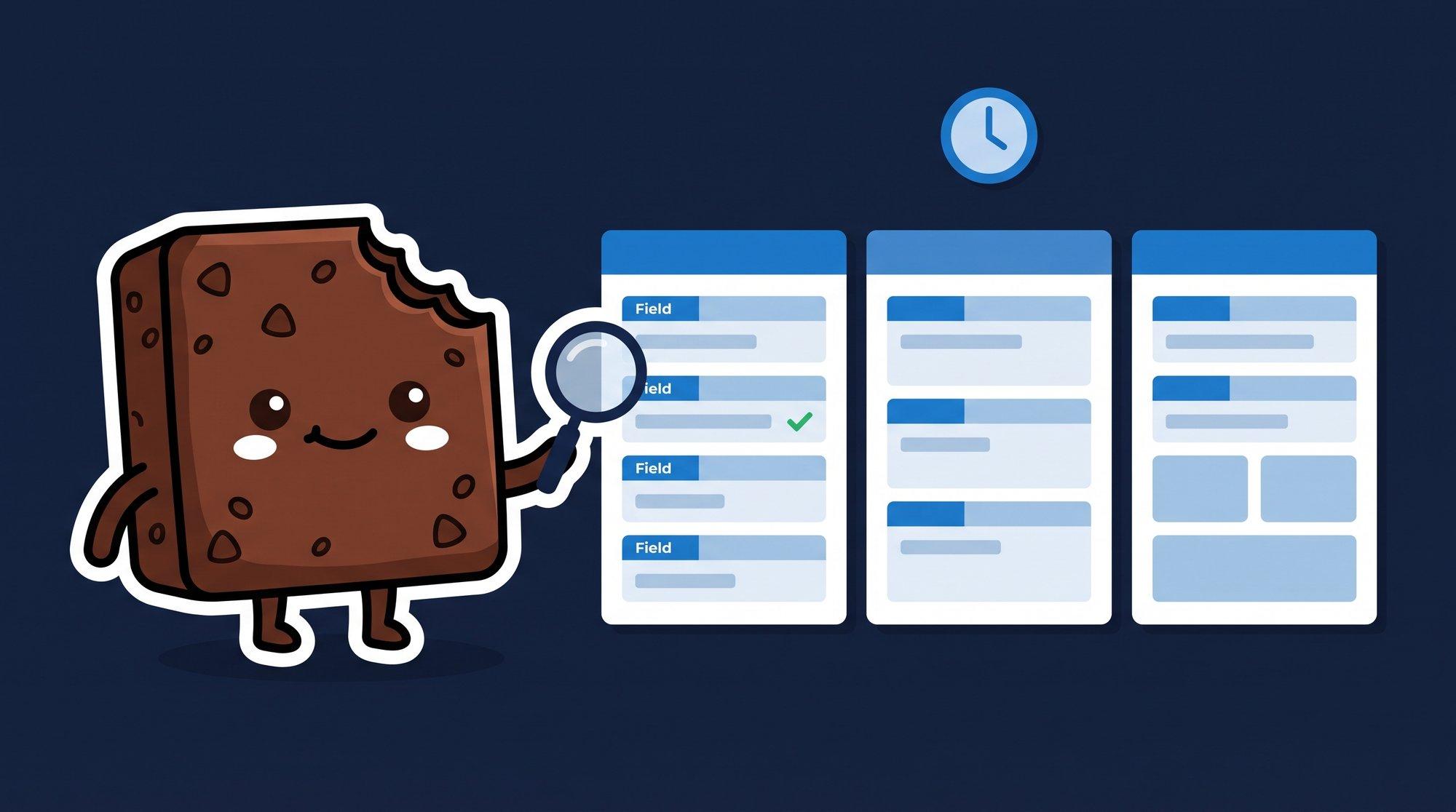
If you ask ten psychologists to show you their session notes, you will find ten different systems: notebooks with their own abbreviations, Word documents without structure, notes from a line written to those in a hurry between patient and patient. The problem is not the variety, it is the inconsistency. That’s why there are session notes formats, and that’s why SOAP notes became the most widespread standard in health.
When each note follows a different criterion, comparing the evolution of a patient becomes difficult, retaking a case costs twice as much and, before a judicial request or an audit of the professional college, these loose notes are worth little as backup. A note without date, without structure and with mixed personal judgments does not defend you: exposes you.
A format does not change your way of working. Change the way you document what you already do. Here you will find SOAP, DAP and BIRP explained field by field, the same fictitious session written in the three ways and templates ready to copy.
What is a session note format and why to use one
A note format is a fixed structure that defines what you register after each session and in which order. Instead of facing a blank sheet, you complete predefined fields: what the patient told, what you observed, what evaluation you did, what follows.
The notes of evolution are not a separate document: they are part of medical records and apply the same legal rules to them. 26.529 Law requires "clear and precise records of acts performed by professionals" (Art. 15.d), in chronological order and in a complete way. The law does not impose a specific format, but a standardized one makes it much easier to comply with that standard.
Using a format has specific benefits:
- Consistency: all your notes follow the same logic, session after session
- Speed: Do not waste time deciding what to write down or how to organize it
- Visible evolution: you can compare the 3 session with the 15 because the fields are the same
- Legal backup: a structured, dated and complete note has more probative value than a loose note
- Interconsultation and referral: another professional can understand the case without you translating your abbreviations
Note
Session notes are part of the medical records according to the 26.529 law: they must be kept at least 10 years since the last performance, protected as sensitive data (the 25.326 law) and provided with a copy to the patient if requested. I wrote each note knowing that the patient has the right to read it.
Notes SOAP in psychology: the most widespread format
The SOAP format is born in the medicine of the years 60, within Lawrence Weed's problem-oriented registration model, and over time it was adopted in almost all health disciplines. Its strength: it clearly separates what the patient says from what you observe, and both from your clinical interpretation.
S: Subject
What the patient refers to in his own words: how he felt, what he worries about, how he describes his symptoms. Textual appointments are valuable here because they document without interpreting.
OR: Objective
The observable and measurable: punctuality, general aspect, rhythm of speech, affection, conduct in session, results of scales, fulfillment of tasks. Everything a third party could verify if he had been present.
A: Analysis
Your clinical evaluation: how you integrate the subjective and the objective, what progress is there with respect to objectives, whether the diagnostic hypothesis is sustained or adjusted. It is the field where your professional judgment is documented.
Q: Plan
What follows: interventions for the next session, assigned tasks, frequency adjustments, referrals or interconsultations.
Notes DAP: abbreviated version
The DAP format condenses SOAP into three fields: Data, Analysis and Plan. The central difference is that it merges the subjective and the objective into a single Data field.
- D: Data. Everything that happened in the session: what the patient told, what you observed, the topics worked. Without separating source or type of information.
- A: Analysis. As in SOAP: your clinical reading of those data.
- P: Plan. As in SOAP: the next steps.
DAP is the preferred option for many psychologists who find artificial the division between subjective and objective in psychotherapy, where the main material is the patient's speech. Fewer fields mean faster notes, at the cost of losing that explicit distinction between story and observation.
Notes BIRP: the intervention in the center
The BIRP format organizes the note around what you did as a therapist and how the patient responded. Its four fields:
- B: Behavior (Behavior). Presentation and behavior of the patient: what brought him into session, what symptoms he refers to, how he looks.
- I: Intervention. What did you do: applied techniques, markings, psychoeducation, work on specific objectives.
- A: Answer. How the patient reacted to these interventions: participation, insight, endurance, changes during the session.
- P: Plan. The next steps, as in the other formats.
BIRP is widely used in institutional contexts because it accurately documents the therapeutic activity: what intervention was made and what outcome it had. If you work with health insurance or institutions that audit treatments, that record is a strong backup.
The same session written in all three formats
Nothing clarifies more than a comparable example. Let's take a fictitious session: M., 34 years, anxiety consultation, 8th session. A demanding week for a job presentation, a timely breathing technique and an exposure achieved with tolerable discomfort.
In SOAP format
S: M. refers to a week "very loaded" for a presentation at work. It says: "I thought I was going to pass the usual, but this time I could stop before." It reports anticipated concern the days before and difficulty sleeping the night before the presentation.
O: It arrives punctually. Organized speech, with accelerated rhythm when reporting the work episode. Congruent affection. Moderate anxiety observable at the beginning, which decreases during the session. It completed the agreed thought record (5 of 7 days).
A: Progress on the objectives of anxiety management: identified anticipatory thoughts and applied diaphragmatic breathing before exposure. Avoidance persists in social situations outside the workplace. The working hypothesis remains.
Q: Continue with gradual exposure: attendance at the Saturday family meeting is agreed. Thought recording with reassessment column is assigned. Next session in one week.
In DAP format
D: M. refers to a week "very loaded" by a work presentation, with anticipation concern and insomnia the previous night. He applied diaphragmatic breathing before exposing himself and said: "this time I could slow down before." He arrives on time, accelerated speech at the beginning, moderate anxiety that gives in during the session. He completed the thought record 5 of 7 days.
A: Progress in the objectives of anxiety management: identification of anticipated thoughts and spontaneous use of the technique worked. Social avoidance persists outside the workplace.
Q: Gradual exposure (Saturday family reunion), reassessment thinking record, next session in a week.
In BIRP format
B: M. relates an episode of anticipation anxiety before a work presentation, with insomnia the previous night. It arrives punctually, speech accelerated at the beginning of the session, observable moderate anxiety.
I: Review the register of thoughts of the week. The use of diaphragmatic breathing is reinforced. The restructuring of the thought "is going to pass me the usual" and psychoeducation is performed on the curve of anxiety.
R: M. participates actively, identifies anticipatory thinking without help and proposes the next exercise of exposure on his own initiative. Anxiety decreases throughout the session.
Q: Agreed exhibition (Saturday family meeting), recording thoughts with reassessment column, next session in a week.
The session is the same, but each format illuminates something different: SOAP gives the most complete picture, DAP is the most agile, and BIRP leaves the clearest record of what you did and what effect it had.
Comparative table of session note formats
| Criterion | SOAP | DAP | BIRP |
|---|---|---|---|
| Fields | 4 (Subjective, Objective, Analysis, Plan) | 3 (Data, Analysis, Plan) | 4 (Driving, Intervention, Response, Plan) |
| Separate patient account and self-observation | Yes, explicitly. | No | Partially |
| Document the intervention of the therapist | Implicitly | Implicitly | Yes, with its own field |
| Writing Time | Major | Minor | Intermediate |
| Strengths | Complete table, interdisciplinary standard | Agility, simplicity | Mapping of interventions and response |
| Context where it shines | Interconsultation, health teams | private clinical practice, high volume of patients | Institutions, audits, health insurance |
Which format suits your theoretical orientation
None of the three formats belong to a school. They are containers, not theoretical frames, and anyone adapts to any orientation. That said, some natural affinities:
- TCC and behavioral therapies: SOAP and BIRP fit almost without friction. You work with measurable objectives, defined techniques and inter-session tasks, which is what these formats ask for.
- Psychoanalysis and psychodynamics: Many colleagues prefer DAP, because the division between subjective and objective can be forced when the central material is speech and transfer. The field of Analysis comfortably houses the reading of the material and the hypotheses.
- Systemic: in sessions with couples or families, the SOAP Objective field (or BIRP Conduct) serves to record interaction patterns: who speaks, who interrupts, how the system is reorganized before an intervention.
- Integrative: any of the three works. What matters is that you choose one and hold it, because the value of the format is in the comparability between sessions.
Council
If you never used a format, start with DAP: it is the least frictional and you can migrate to SOAP or BIRP later. Hold it at least a month before evaluating a change: consistency is worth more than choice.
Frequent errors when writing session notes
Write note days later
Memory rebuilds, does not reproduce. A note written three days later mixes what happened with what you remember happened. Ideally it is to write it the same day, as soon as the session ends.
Notes to a line
"Good session, anxiety was worked out" does not document anything: it does not say what was worked, how the patient responded or what follows. Faced with a requirement, such a note is worth almost the same as none.
The opposite extreme: transcribing the session
A note is not a derecording. Registering each sentence takes time, exposes more intimate content than necessary and buryes the relevant in detail. The format exists just to force you to synthesize.
Mixing personal judgements with clinical observations
"The patient was unbearable" is not an observation, it is a relief. The patient can read his or her medical records, and a judge too. He or she registers behaviors and clinical formulations, not opinions.
Change format every two weeks
If the 4 session is in SOAP, the 5 in a notebook and the 6 in a message you sent yourself, you lost the comparability that makes the format useful.
Save notes anywhere
Session notes are sensitive data protected by the 25.326 Law. A personal Google Drive folder without encryption or access control is not a place for clinical material. On this we write a comparison between paper, Google Drive and clinical software.
Important
Before a court order, what is not registered does not exist for evidentiary purposes, and what is misregistered can play against you. I wrote each note as if one day you had to back yourself in it, because that day can come.
Ready-to-copy templates
Take the one that corresponds to your chosen format and adapt it to your practice.
SOAP Template
NOTA DE SESIÓN (SOAP)
Paciente: [Iniciales o N° de legajo]
Sesión N°: [Número] | Fecha: ____/____/________
Asistencia: [ ] Presente [ ] Ausente con aviso [ ] Ausente sin aviso

S (SUBJETIVO)
Lo que el paciente refiere: estado de la semana, síntomas,
preocupaciones. Incluir citas textuales relevantes.

O (OBJETIVO)
Lo observable: puntualidad, aspecto, discurso, afecto,
resultados de escalas, cumplimiento de tareas.

A (ANÁLISIS)
Evaluación clínica: integración de S y O, avance respecto
de los objetivos, estado de la hipótesis diagnóstica.

P (PLAN)
Próximos pasos: intervenciones previstas, tareas,
ajustes de frecuencia, derivaciones.

Firma y matrícula: _________________
DAP Template
NOTA DE SESIÓN (DAP)
Paciente: [Iniciales o N° de legajo]
Sesión N°: [Número] | Fecha: ____/____/________
Asistencia: [ ] Presente [ ] Ausente con aviso [ ] Ausente sin aviso

D (DATOS)
Qué pasó en la sesión: relato del paciente, observaciones,
temas trabajados, cumplimiento de tareas.

A (ANÁLISIS)
Lectura clínica de los datos: avance, hipótesis, cambios
respecto de sesiones anteriores.

P (PLAN)
Próximos pasos: tareas, foco de la próxima sesión, ajustes.

Firma y matrícula: _________________
BIRP Template
NOTA DE SESIÓN (BIRP)
Paciente: [Iniciales o N° de legajo]
Sesión N°: [Número] | Fecha: ____/____/________
Asistencia: [ ] Presente [ ] Ausente con aviso [ ] Ausente sin aviso

B (CONDUCTA)
Presentación del paciente: síntomas referidos, comportamiento
observable, material que trae a sesión.

I (INTERVENCIÓN)
Qué se hizo: técnicas aplicadas, señalamientos,
psicoeducación, objetivos trabajados.

R (RESPUESTA)
Reacción a las intervenciones: participación, insight,
resistencias, cambios durante la sesión.

P (PLAN)
Próximos pasos: acuerdos, tareas, foco de la próxima sesión.

Firma y matrícula: _________________
If you prefer not to put this together by hand, in Brauni the dynamic templates adapt to any of the three formats (or your own), and the IA can draft the note from the session audio, already organized in the fields of your format. The clinical judgment remains yours: the AI prepares the draft, you review each field and decide what is left. The full detail is in session notes with AI.
Frequently Asked Questions
What does SOAP mean in session notes?
It is the acronym in English of Subjective, Objective, Assessment and Plan: Subjective (what the patient refers to), Objective (what you observe), Analysis (your clinical evaluation) and Plan (the next steps). It is the most widespread documentation format in health.
Is it mandatory to use SOAP, DAP or BIRP in Argentina?
No. The 26.529 Act requires clear, accurate, chronological and complete records, but does not impose any format. SOAP, DAP and BIRP are professional conventions that help you meet that standard, not legal requirements.
Can I modify the fields or combine formats?
Yes. Many professionals add fields of their own (risk, medication, coordination with other professionals) or build hybrids. The important thing is that the structure is stable over time: the value is in consistency, not in format orthodoxy.
Which format is faster to write?
DAP, for having only three fields and not demanding the separation between subjective and objective. Anyway, real speed comes from habit: with practice, any of the three is completed in a few minutes.
Are session notes the same as the medical records?
No. The notes of evolution are part of the medical records, which also includes the patient's data, initial evaluation, treatment plan, informed consents and closure. The notes inherit all their legal obligations: conservation, confidentiality and patient access.
What about my personal notes or work hypotheses?
Unlike other countries, Argentine regulations do not formally distinguish between progress notes and personal notes of the therapist. Prudent posture: I assumed that everything you register can be read by the patient or required by a judge, and wrote accordingly, with well-founded clinical formulations and without loose speculations. Faced with doubt, consult your professional college; the Code of Ethics of FePRA is the reference in matters of professional secrecy and records.
Free Brauni test for 30 days, no card
Automatic session notes, digital medical records and more.
Start for freeSummary
- A session note format is a fixed structure that orders what you register; the 26.529 Act does not impose any, but requires clear, accurate and chronological records
- SOAP (Subjective, Objective, Analysis, Plan): the most complete and interdisciplinary standard; ideal if you work as a team or do interconsultations
- DAP (Data, Analysis, Plan): the most agile; ideal for private clinical practice
- BIRP (Driving, Intervention, Response, Plan): the one that best documents therapeutic activity; ideal in institutions and before audits
- No format belongs to a theoretical orientation: choose by affinity and context, and sustain the choice in time
- Notes are part of the medical records: same rules of conservation (minimum 10 years), confidentiality (law 25.326) and patient access
- I wrote each note on the same day of the session, without personal judgments and knowing that the patient (or a judge) can read it
Related articles
Professional practice
High therapeutic: when to give it, how to document it and closing model
Guidance on therapeutic discharge: when to give it, how to work the closure with the patient, what to record in the medical records and model closing note.
Professional practice
Psychological treatment plan: how to put it together and model to use
Practical guide to put together a psychological treatment plan: components, evaluable objectives, review, frequent errors and ready-to-use template.

Professional practice
Informed consent in psychology: what is it, when to use it and downloadable model
Everything you need to know about informed consent in psychology. What should include, when mandatory, difference with informed consent and ready-to-use template.